Greek history, briefly
Where you study has a very long memory.
Greece is a modern European country with an unusually deep past. You do not need any of it to pass a module — but knowing the outline turns a walk to class into something closer to a walk through the story. Here it is, in order, with dates.
Why this page
Dates for the early periods are conventional and approximate. We keep to what historians broadly agree on and say “c.” where the evidence is soft.
You will study in the country that gave us the words academy, democracy and history itself. It helps to know the story.
-
Around four thousand years
From Bronze Age palaces on Crete to a founding member of the eurozone — one of the longest continuously recorded histories in Europe.
-
History you can walk into
In Athens, Thessaloniki and Crete the past is not in a separate district. It is between the metro stop, the café and the lecture room.
-
A modern European state
Independent since the 1820s, a republic since 1974, in the EU since 1981. The history is old; the country you will live in is not.
The timeline
From Knossos
to the euro.
Ten chapters, oldest first. Filled markers are the turning points worth remembering if you remember nothing else. Where a chapter left something you can still see, we say where.
-
Αʹ c. 3000–1100 BC Bronze Age
Minoans and Mycenaeans
On Crete, the Minoans built palace centres such as Knossos and Phaistos, traded across the Aegean and wrote in a script, Linear A, that is still undeciphered. On the mainland, the Mycenaeans ruled from fortified citadels like Mycenae and Pylos. Their script, Linear B, was deciphered in 1952 and turned out to be the earliest known written Greek. Around 1200–1100 BC most of these palace societies collapsed, for reasons still debated.
- CreteKnossos, Phaistos
- MainlandMycenae, Pylos
- 1952Linear B deciphered
See it: the palace at Knossos and the Heraklion Archaeological Museum, Crete.
-
Βʹ c. 800–480 BC Archaic period
The alphabet, Homer and the birth of the polis
Greeks adapted the Phoenician script into an alphabet with vowels, and the Homeric epics — the Iliad and the Odyssey — took written form. The defining invention was the polis: the self-governing city-state, with its own citizens, laws and gods. Hundreds of them grew up, and Greek settlers founded new cities from southern Italy to the Black Sea. In Athens, the reforms of Cleisthenes in 508/507 BC laid the foundations of democracy.
- 776 BCFirst Olympic Games (traditional date)
- 508/7 BCCleisthenes’ reforms
-
Γʹ c. 480–323 BC Classical period
Classical Athens: democracy, philosophy, the Parthenon
After Greek city-states turned back the Persian invasions at Marathon (490 BC) and Salamis (480 BC), Athens entered its most celebrated era. Its citizens — adult free men, not women, foreigners or the enslaved — voted directly in the Assembly. Under Pericles the Parthenon was built on the Acropolis (447–432 BC). Drama, history-writing and philosophy flourished: Socrates questioned everything and was executed in 399 BC; his student Plato founded the Academy; Plato’s student Aristotle founded the Lyceum. The long Peloponnesian War with Sparta (431–404 BC) ended Athens’ empire, but not its intellectual life.
- 490 BCMarathon
- 447–432 BCParthenon built
- 399 BCDeath of Socrates
- c. 387 BCPlato’s Academy
- 335 BCAristotle’s Lyceum
See it: the Acropolis, the Acropolis Museum and the Ancient Agora, Athens.
-
Δʹ 336–31 BC Alexander & the Hellenistic world
Alexander, and Greek as a world language
Macedon, in the north, came to dominate the Greek cities under Philip II. His son Alexander the Great, taught as a boy by Aristotle, reigned from 336 to 323 BC and conquered an empire stretching from Egypt to the Indus. After his death it split into rival kingdoms, but Greek became the shared language of government, trade and learning across the eastern Mediterranean. Alexandria, with its famous library, became a centre of scholarship. Thessaloniki was founded around 315 BC and named after Alexander’s half-sister, Thessalonike.
- 331 BCAlexandria founded
- c. 315 BCThessaloniki founded
- 31 BCBattle of Actium
See it: the royal tombs at Vergina (ancient Aigai), a day trip from Thessaloniki.
-
Εʹ 146 BC – AD 330 Roman Greece
Conquered, and quietly conquering
Rome took control of mainland Greece in 146 BC, the year it destroyed Corinth. Yet Greek culture shaped its conquerors: educated Romans learned Greek and many studied in Athens. The apostle Paul preached in Athens and wrote letters to the Christians of Thessaloniki in the 1st century AD. Emperors such as Hadrian endowed Athens with new buildings, and in Thessaloniki the emperor Galerius built a palace complex around AD 300.
See it: Hadrian’s Library and the Roman Agora, Athens; the Arch of Galerius and the Rotunda, Thessaloniki.
-
Ϛʹ 330–1453 Byzantine era
Byzantium: the Greek-speaking Roman Empire
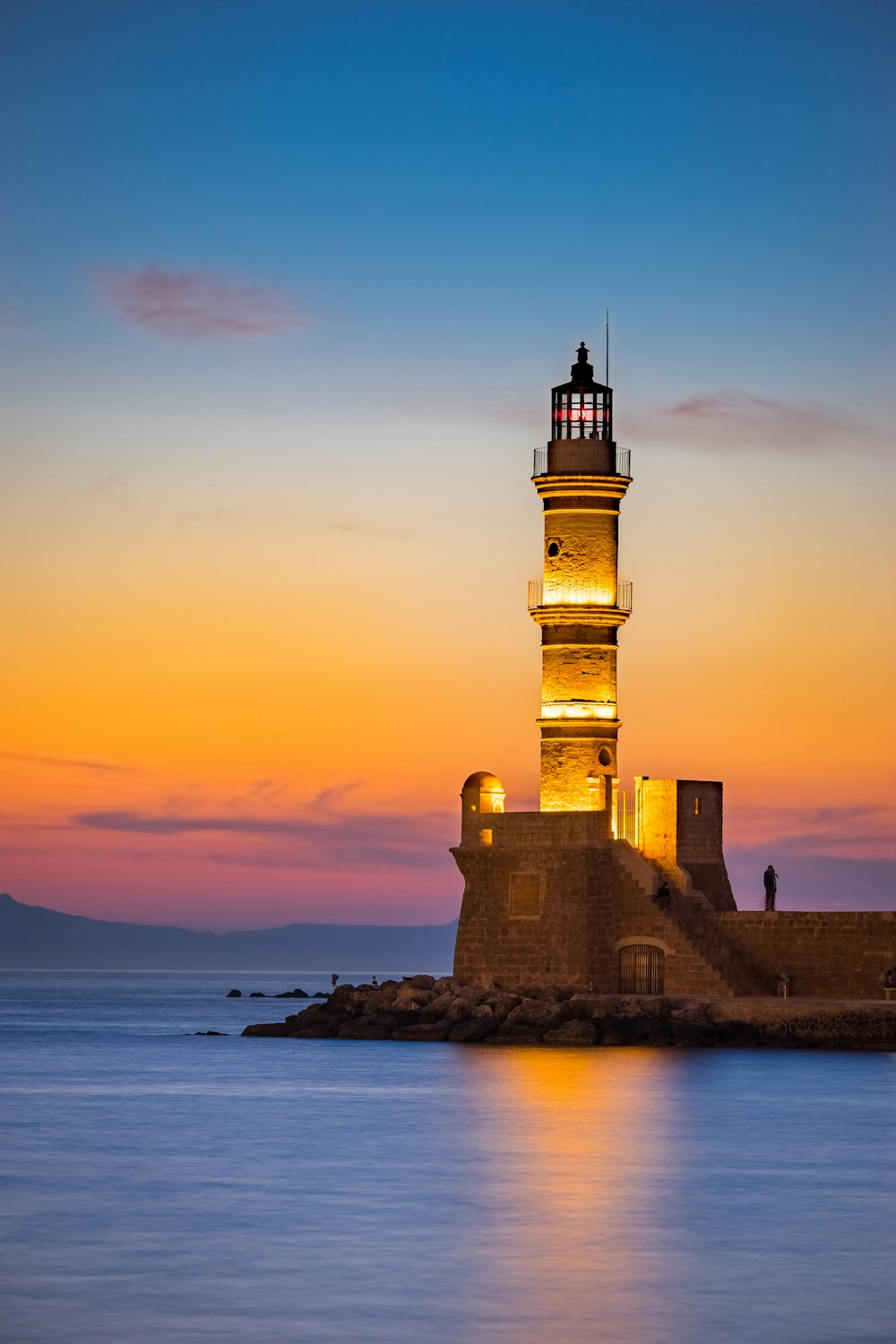
In 330 the emperor Constantine made Constantinople his capital. The eastern Roman Empire — later called Byzantine — lasted another thousand years, Christian and increasingly Greek-speaking. Thessaloniki was one of its greatest cities, and its early Christian and Byzantine churches are now a UNESCO World Heritage Site. Crete followed its own path: it was held by Venice from the early 13th century until 1669, which is why Chania’s old harbour looks the way it does. The empire ended when Constantinople fell to the Ottomans in 1453.
- 330Constantinople dedicated
- 1453Fall of Constantinople
See it: the Hagios Demetrios and Hagia Sophia churches, Thessaloniki; the Venetian harbour, Chania.
-
Ζʹ 15th c. – 1821 Ottoman period
Four centuries of Ottoman rule
Thessaloniki fell to the Ottomans in 1430 and Athens in 1456; most Greek lands were part of the Ottoman Empire for close to four hundred years, Crete from 1669. The Orthodox Church and the Greek language held communities together, and Greek merchants built trading networks across Europe. In 1687, during a Venetian siege, a shell ignited gunpowder stored in the Parthenon and blew out much of its centre. By the late 18th century, ideas from the Enlightenment and the French Revolution were feeding a growing movement for independence.
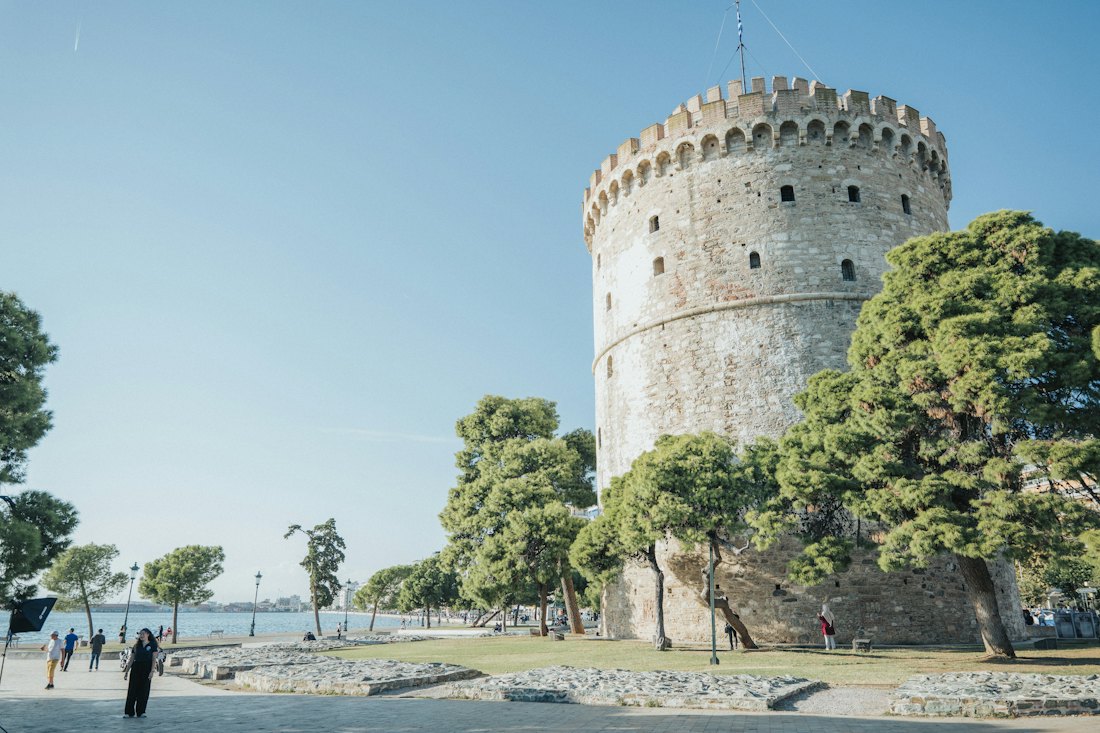
See it: the White Tower, Thessaloniki, built under Ottoman rule and now a museum of the city.
-
Ηʹ 1821–1913 Independence & the modern state
1821: the War of Independence
The Greek War of Independence began in 1821; 25 March is still the national day. After years of fighting, and the intervention of Britain, France and Russia at the naval battle of Navarino in 1827, an independent Greek state was recognised in 1830. Its first capital was Nafplio; Athens took over in 1834, and the University of Athens — the first university of the modern Greek state — opened in 1837. The country grew in stages: Thessaloniki joined in 1912 during the Balkan Wars, and Crete formally united with Greece in 1913.
- 1821Revolution begins
- 1830Independence recognised
- 1837University of Athens
- 1912–13Thessaloniki and Crete join
-
Θʹ 1913–1981 The 20th century
War, dictatorship and democracy restored
A hard century. Defeat in Asia Minor in 1922 was followed by the 1923 population exchange with Turkey, which brought over a million refugees into Greece. The Aristotle University of Thessaloniki was founded in 1925. Greece rejected Italy’s ultimatum on 28 October 1940 — still marked as “Ochi Day” — and then endured German occupation until 1944, followed by civil war (1946–49). A military junta ruled from 1967 to 1974. When it fell, democracy was restored, a referendum made Greece a republic, and on 1 January 1981 Greece joined the European Economic Community.
- 1940“Ochi”
- 1974Democracy restored
- 1981Joins the EEC
-
Ιʹ 1981 – today Greece in Europe
A European country you can live in
Greece adopted the euro in 2001, hosted the Olympic Games in Athens in 2004 and is part of the Schengen area. It came through a severe debt crisis in the 2010s. Today it is a parliamentary republic of around ten million people, a major shipping nation and one of the world’s most visited countries — and, for international students, a place to earn an English-taught degree inside the EU.
- 2001Euro
- 2004Athens Olympics
See it: the Acropolis Museum, Athens, opened in 2009 at the foot of the rock.

Where the word comes from
Every academy is named after an olive grove in Athens.
Around 387 BC Plato began teaching in a grove just outside the walls of Athens, sacred to a local hero called Akademos. The place was the Akadémeia, and his school took its name. Some fifty years later Aristotle opened his own school at the Lyceum, a gymnasium sacred to Apollo Lykeios.
Both names outlived the schools. You can visit both sites in Athens today: the archaeological park at Akadimia Platonos, and the excavated remains of the Lyceum in the centre of the city, close to the Byzantine and Christian Museum.
- AcademyAkadémeia
Plato’s school → academy, academic, and academies of science, art and music.
- LyceumLýkeion
Aristotle’s school → the French lycée and Italian liceo for secondary schools.
- SchoolScholé
Originally “leisure” — the free time spent in discussion and learning.
“All human beings by nature desire to know.”
Aristotle, the opening line of the Metaphysics
History on your doorstep
What to see in the three student cities
Most major sites and state museums offer free or reduced entry to students, especially from the EU — check the current rules and carry your student card. Many are free for everyone on set days. Living in each city
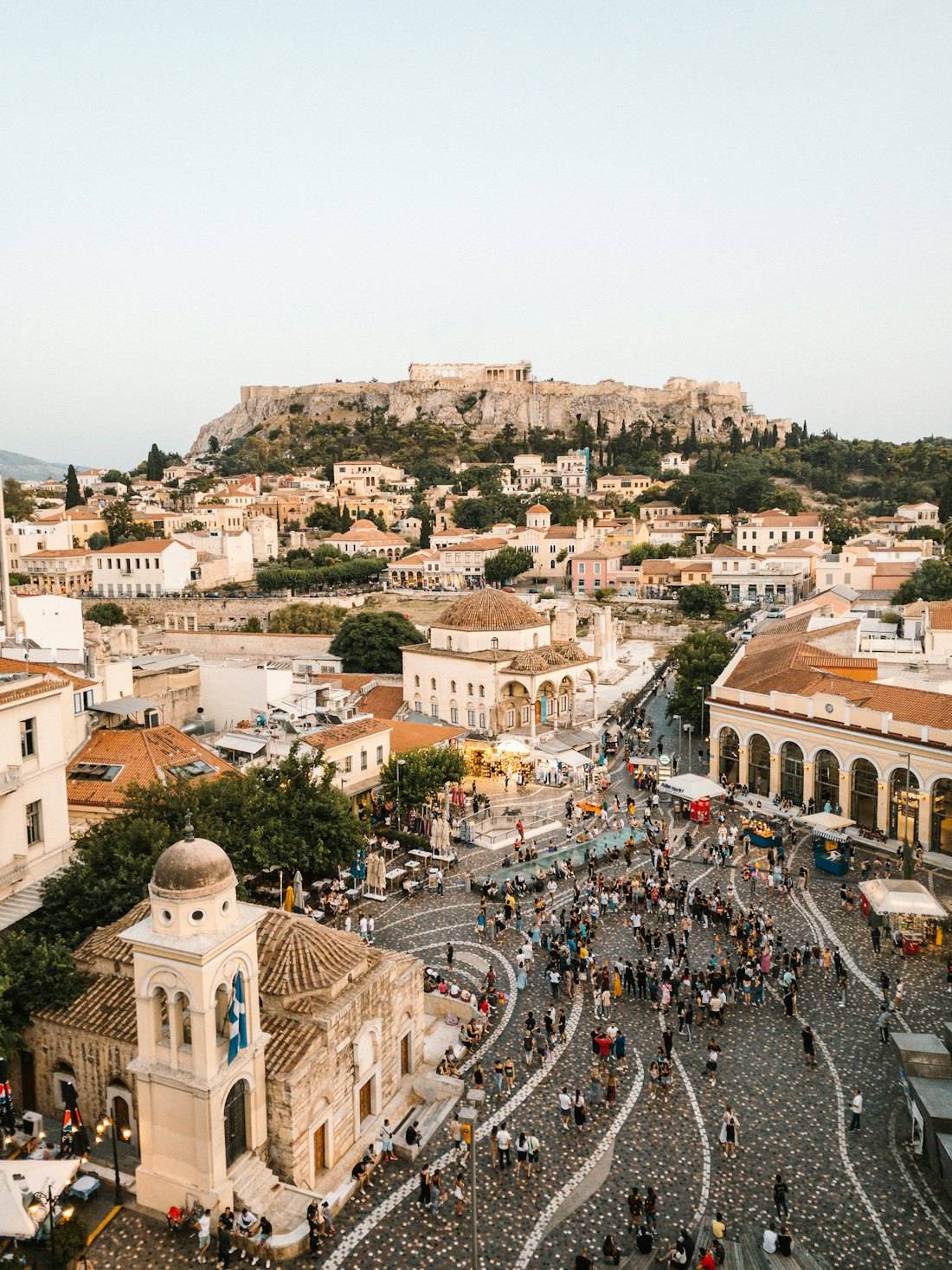
Athens
Classical Athens, still in use
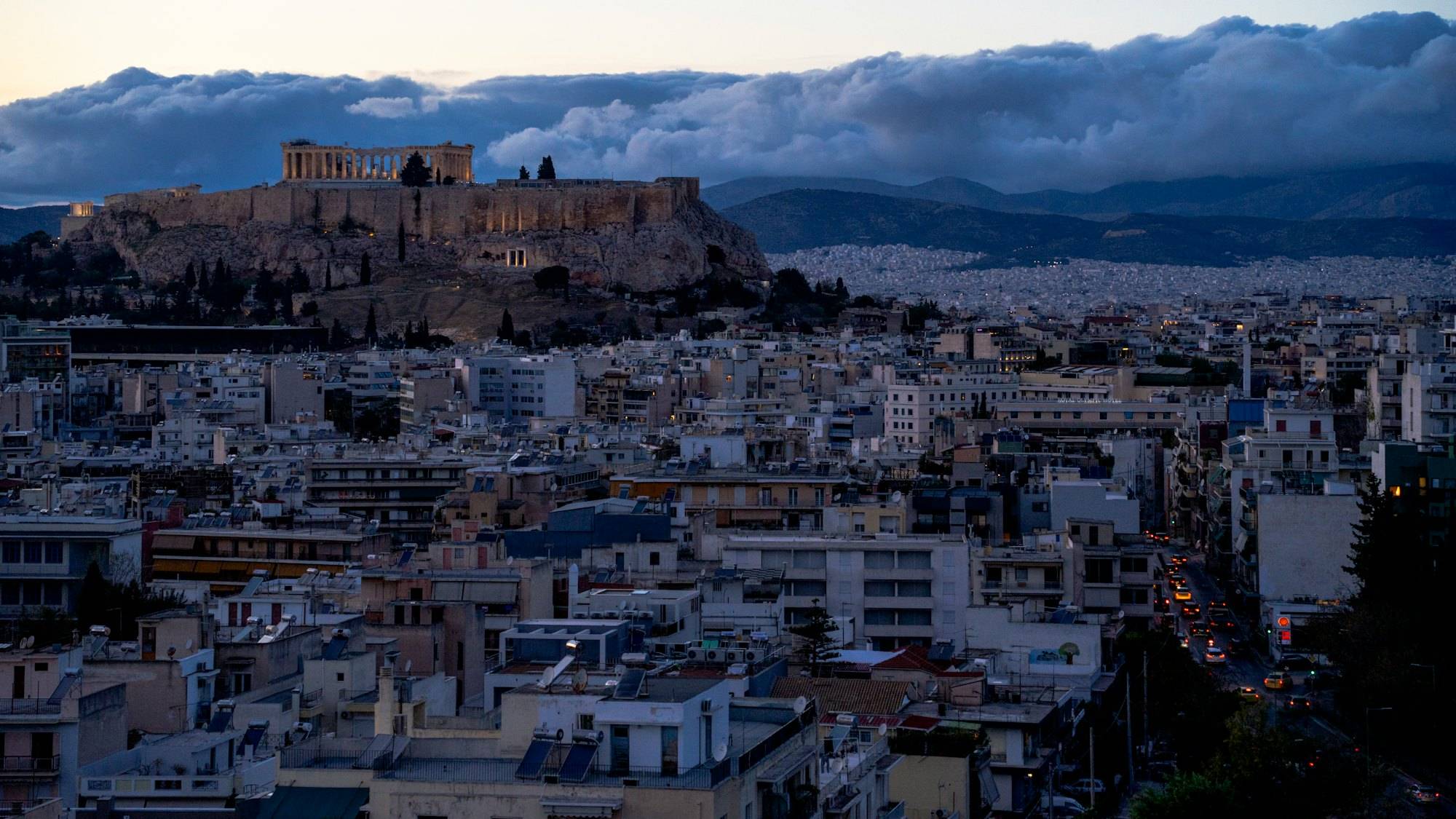
- The Acropolis and the Parthenon, then the Acropolis Museum below it
- The Ancient Agora, where Socrates talked, with the rebuilt Stoa of Attalos
- National Archaeological Museum — the country’s largest collection
- Plato’s Academy park and Aristotle’s Lyceum
Thessaloniki
Roman, Byzantine and Ottoman layers
- The White Tower on the waterfront
- The Rotunda and the Arch of Galerius
- Hagios Demetrios and the city’s UNESCO-listed churches
- Vergina (ancient Aigai), about an hour away
Crete
Where European civilisation began
- Knossos, the largest Minoan palace site, near Heraklion
- Heraklion Archaeological Museum and its Minoan collection
- Chania’s Venetian harbour and old town
From history to your degree
The backdrop is ancient. The degree is current.
English-taught bachelor’s and master’s degrees, awarded by UK and US universities, in the cities on this page. Tell us what you want to study and an advisor will tell you honestly which routes fit.
- Browse study areas, fees and the institutions we introduce
- Ask Athena for a two-minute shortlist
- Or write to an advisor directly — it costs nothing to ask
A note on accuracy
This is a short overview, not a textbook. Dates follow standard reference chronologies; those before about 500 BC are approximate, and period boundaries are conventions that historians draw differently. Opening hours and student discounts at sites and museums change — check before you visit.